Pakistan's Historic Role as Peacemaker Between the US and Iran
A Moment That Changed Everything
When the United States and Iran went to war earlier this year, the world held its breath. Oil prices jumped. Trade routes were threatened. And the Middle East looked like it was heading toward a full-scale disaster. But then something unexpected happened — Pakistan stepped in.
Not with weapons. Not with threats. With diplomacy.
How It All Started
For weeks, Pakistan had been quietly working behind the scenes. Prime Minister Shehbaz Sharif was making phone calls. Army Chief Field Marshal Asim Munir was flying between capitals. Foreign Minister Ishaq Dar was holding urgent meetings. The goal was simple but extremely difficult — stop the war and get both sides talking.
Iran's ambassador to Pakistan said something that said it all: "We will do talks in Pakistan and nowhere else, because we trust Pakistan." That one sentence showed just how much weight Islamabad was carrying in this crisis.
The Islamabad Talks — A Historic First
On April 11 and 12, 2026, history was made in Islamabad. The United States and Iran sat across from each other for direct, face-to-face talks for the first time since the 1979 Islamic Revolution. That is 47 years of silence, broken by Pakistan.
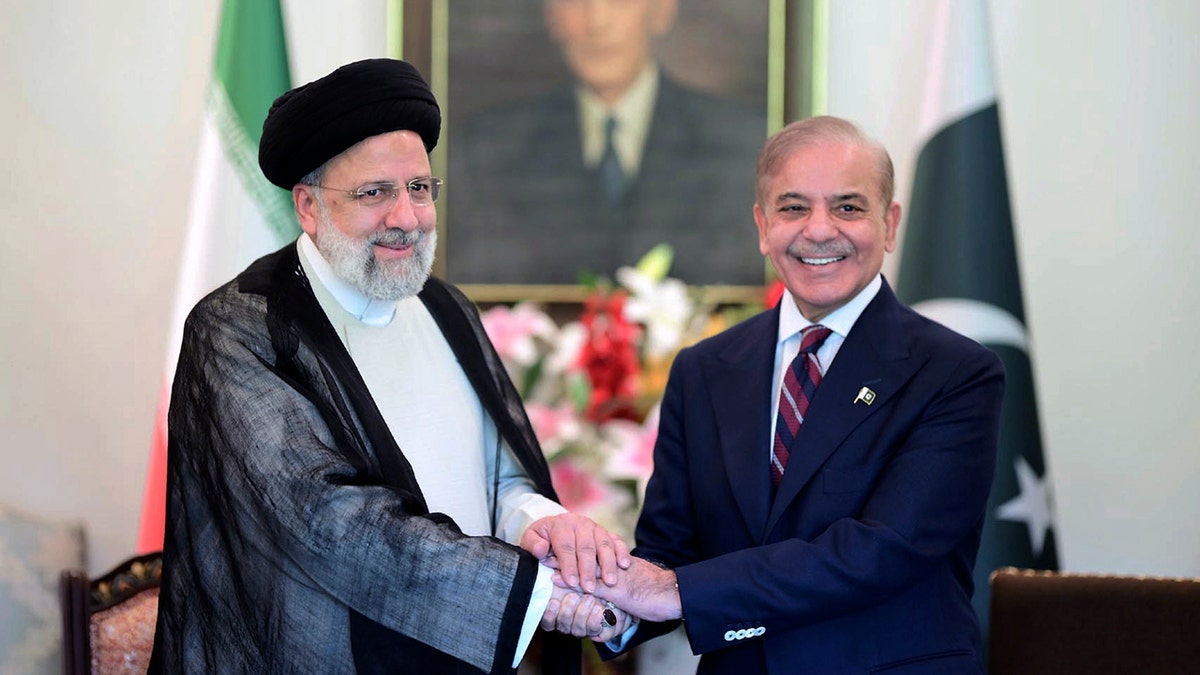
The American delegation of nearly 300 members was led by Vice President JD Vance, alongside special envoys Steve Witkoff and Jared Kushner. Iran sent a 70-member team led by Parliament Speaker Mohammad Bagher Ghalibaf and Foreign Minister Abbas Araghchi. In the middle, guiding everything, was Pakistan's own trio — PM Shehbaz Sharif, Field Marshal Asim Munir, and Foreign Minister Ishaq Dar.
The talks lasted 21 hours across three rounds. It was exhausting, tense, and complicated. No final deal was reached — but the ice was broken. And that alone was a massive achievement.
Why Pakistan? Why Now?
This is the question many people are asking around the world. Why did both America and Iran agree to let Pakistan mediate?
The answer lies in trust. Pakistan shares a long border and deep religious and cultural ties with Iran. At the same time, Pakistan has been building a strong personal relationship with US President Donald Trump, with Field Marshal Asim Munir having met Trump directly at the White House. Experts at the Stimson Center noted that Pakistan would not be hosting these talks if it did not have that strong relationship with Washington and that personal trust between its leaders and President Trump.
Analysts also point out that this is not the first time Pakistan has played this kind of role. Back in the 1970s, Pakistan was the bridge that helped the United States and China come together. Now, half a century later, it is doing something similar — this time between Washington and Tehran.
Asim Munir: The Man Behind the Mission
Much of Pakistan's success in this diplomatic effort comes down to one man — Field Marshal Asim Munir. He personally traveled to Tehran for three days, meeting Iran's president, foreign minister, parliament speaker, and military commanders. He carried direct messages from Washington. He also had direct talks with US Vice President JD Vance and Trump's special envoys.
President Trump himself publicly named Munir when he announced an extension of the ceasefire, saying he had agreed to hold off an attack upon the personal request of both Field Marshal Asim Munir and PM Shehbaz Sharif. That kind of direct mention from the US President is rare and shows just how seriously Washington takes Pakistan's role right now.
Still a Long Road Ahead
Pakistan's job is far from done. Iran has been publicly hesitant about returning to a second round of talks, even while privately signaling some flexibility. The ceasefire has been extended, but a permanent deal is still out of reach. Trump's public statements — at times claiming agreements that Iran says were never finalized — have added more pressure and confusion to an already delicate process.
But Pakistan has not given up. PM Shehbaz is still making calls. Ishaq Dar spoke with Iran's foreign minister just days ago, pushing for continued dialogue. And Pakistan's foreign ministry has made it clear that Islamabad sees this as its responsibility — not just an opportunity.
What This Means for Pakistan
For a country that has often been in the headlines for the wrong reasons — economic crises, political instability, security threats — this moment is different. Pakistan is being seen as a responsible, trusted, and capable player on the world stage.
It joined the Board of Peace, a new global body, at the start of 2026. It hosted the first US-Iran direct talks in nearly five decades. It kept a fragile ceasefire alive when it was about to collapse. These are not small things.
Whether the peace holds or not, Pakistan has already shown the world that when it comes to bringing enemies to the table, Islamabad knows exactly what it is doing.
Final Thoughts
The world is watching Islamabad very closely right now. Every phone call, every diplomatic visit, every behind-the-scenes message matters. Pakistan is walking a very thin line — trying to keep both the US and Iran happy while pushing for a peaceful solution that protects the entire region.
It will not be easy. It has never been easy. But if history is any guide, Pakistan has done this before. And right now, the world is hoping it can do it again.

